The Evolution of Photorealistic AI Avatars in 2026
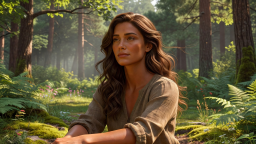
Over the past three years, generative photography shifted from uncanny visual approximations to sub-pixel physical accuracy. Earlier diffusion models suffered from glowing skin, synthetic reflections, and blurred eye structures. In 2026, advances in multi-modal latent conditioning and direct ray-tracing render passes have permanently erased the synthetic boundary.
1. Subsurface Scattering and Skin Micro-Geometry
Human skin is not an opaque surface; light penetrates several millimeters under the epidermis, bounces off blood capillaries, and scatters outwards. Modern AI photography models like Sharedjourny Portrait Pro simulate this physics explicitly, avoiding airbrushed wax figures.
2. Lens Physics Integration
Instead of generating pixels blindly, modern AI models apply simulated optical geometry. Prompts specifying an 85mm f/1.4 prime lens now simulate spherical aberration, edge vignetting, and authentic focal falloff.
3. Character Continuity across Campaigns
With LoRA fine-tuning and zero-shot identity preservation, brands can maintain identical virtual models across multi-location photoshoots without booking physical studio space or flights.